From experiment to everyday
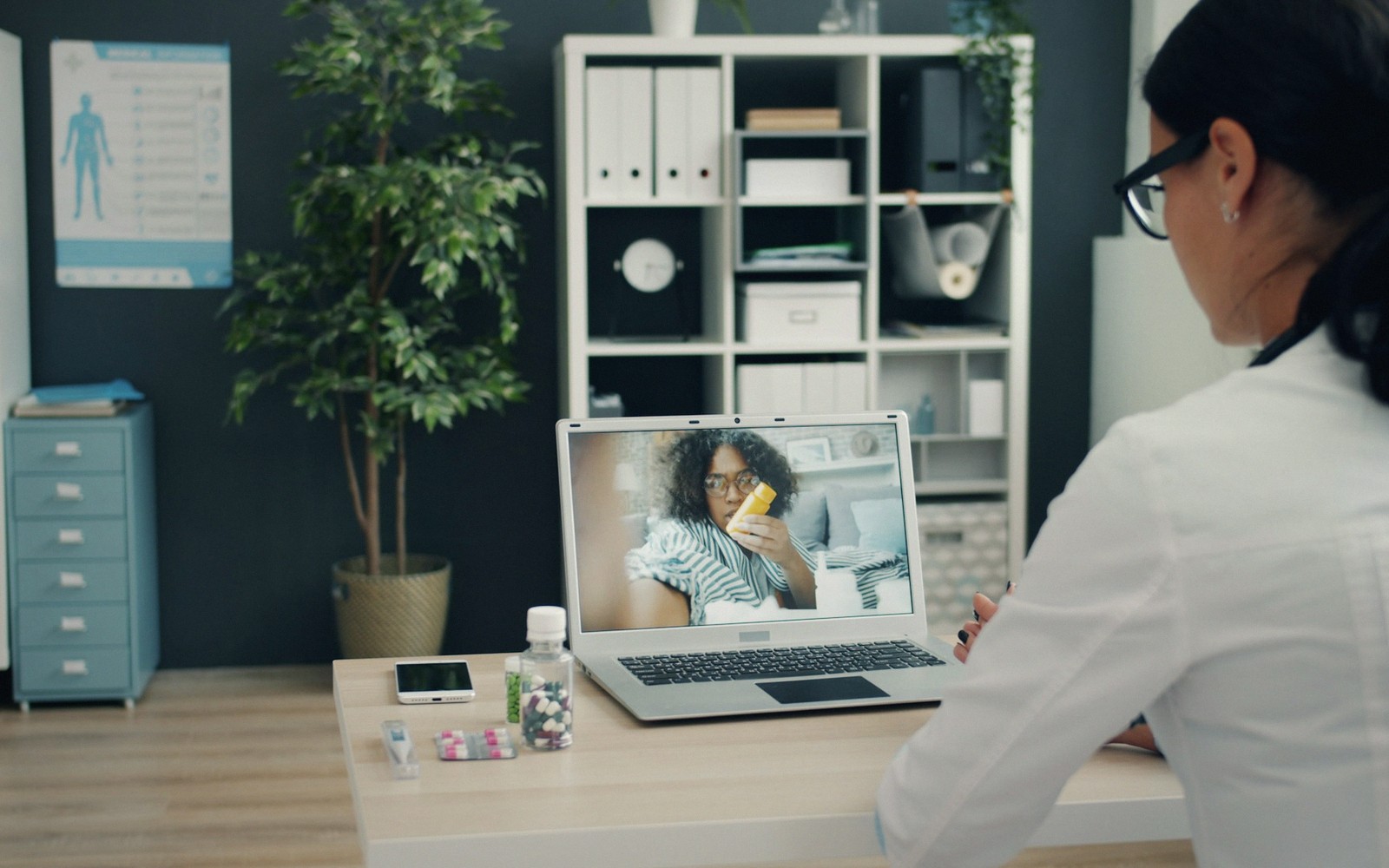
Téléconsultation — a video consultation with a licensed doctor — existed in France before 2020, but only just. A regulatory framework arrived in September 2018, when the health insurance authority Assurance Maladie agreed to reimburse video appointments at the same rate as in-person ones, provided certain conditions were met. Uptake was modest: a few thousand consultations a month, concentrated among early-adopter patients and GPs who had invested in the right software.
Then came the spring of 2020. Within weeks of the first national lockdown, téléconsultation volumes multiplied by a factor of several hundred. Overnight, rules that had previously required a patient to have a known relationship with their doctor were relaxed. Platforms such as Doctolib, Livi, and MédecinDirect saw registrations surge. The state needed the system to absorb demand without overwhelming physical surgeries — and remote consultation, suddenly, was the path of least resistance.
The emergency loosening was always meant to be temporary, and some rules were quietly re-tightened after 2020. But the behaviour had shifted. Patients had discovered it worked, and many had no intention of reverting to the waiting room.
How it works — and what it costs
The basic economics mirror a standard consultation. A general practitioner charges €30 for a video appointment, Assurance Maladie reimburses 70 percent (€21), and the patient covers the remaining €9 ticket modérateur plus any excess above the regulated tariff — with a mutuelle typically picking up the rest. In that sense, téléconsultation is financially unremarkable: same card, same split, different room.
The practicalities do matter, though. To be reimbursed at the full rate, a téléconsultation should ideally pass through the patient's médecin traitant — the registered family doctor whose role sits at the centre of France's gatekeeping logic. Seeing any available doctor online without that link is permitted, but reimbursement can be reduced under normal (non-emergency) rules. This has created a two-tier téléconsultation market: patients with a declared GP who can book a quick video call with that specific doctor, and patients without one — around six million by some estimates — who use open platforms but may pay more out of pocket.
The practical gateway is the carte Vitale, the green chip card that functions as the patient's insurance credential. Platforms integrated with Assurance Maladie's payment infrastructure can process the reimbursement automatically, so the patient pays only their share upfront, or nothing if tiers payant (third-party payment) applies.
The limits no screen can cross
For all its convenience, video medicine has structural ceilings. A doctor cannot take a blood pressure reading, palpate an abdomen, or examine a skin lesion with clinical precision over a camera. French regulators and professional bodies have consistently maintained that téléconsultation supplements the in-person relationship rather than replacing it; guidelines discourage using it to issue prescriptions for controlled substances or to handle anything requiring physical examination.
Geography makes this nuance sharper. In France's medical deserts — the rural and peri-urban zones where GP shortages bite hardest — téléconsultation can reach patients who would otherwise wait weeks for an appointment or drive an hour to the nearest surgery. Dedicated téléconsultation cabins, installed in pharmacies and some mairies, add a physical layer: a soundproofed booth with a camera, blood-pressure cuff and connected stethoscope, staffed by a healthcare assistant who helps transmit readings to the remote doctor. Several hundred such cabins are now operating across France.
Yet the same geography creates a digital-access problem. Remote areas often have patchy broadband; older patients who would benefit most from avoiding travel are sometimes least comfortable on video. Uptake surveys consistently show téléconsultation skewing toward urban, younger, educated users — the people who need it least urgently.
The system, in other words, has absorbed téléconsultation with remarkable speed but hasn't yet solved the equity question it was supposed to help answer.
Repères — the sequence
- September 2018téléconsultation integrated into Assurance Maladie reimbursement
- Spring 2020lockdown triggers mass adoption; relaxed rules introduced
- Post-2020some emergency rule relaxations re-tightened; high usage levels persist